Ask any dermatologist which sunscreen they actually use — not just prescribe — and a disproportionate number will reach for a French pharmacy formula. La Roche-Posay Anthelios. Avène Very High Protection Fluid. Bioderma Photoderm Max. The reasons go beyond marketing: French sunscreens are genuinely formulated differently, and often better, than their US counterparts.
This guide explains why, and gives you our top picks for every skin type and need in 2025.
Why Are French Sunscreens Better?
The short answer: France (and the EU more broadly) has approved more UV filters than the United States. As of 2025, the EU permits over 25 UV filters; the FDA permits just 16, and many of the best modern UV filters — including Tinosorb S, Tinosorb M, and Mexoryl XL — are not approved for use in US-manufactured sunscreens.
This matters because Tinosorb S and M provide exceptionally broad UV-A and UV-B coverage and are photostable, meaning they don’t degrade in sunlight. Mexoryl SX and XL (developed by L’Oréal) offer superior UV-A1 protection — the part of the spectrum most responsible for photoaging and DNA damage. French formulas also tend to be lighter and more cosmetically elegant, making them easier to wear daily under makeup.
The Best French Pharmacy Sunscreens by Category
Best Overall: La Roche-Posay Anthelios UV Mune 400 SPF50+
This is the gold standard of French pharmacy sun protection and arguably the best sunscreen in the world for daily use. It contains Mexoryl 400 — a proprietary filter that provides the broadest UV-A protection currently available — alongside Tinosorb S and UV-B filters for full-spectrum defense. The texture is an ultra-light fluid that disappears into skin with no white cast, making it suitable for all skin tones. It is oil-free, fragrance-free, and non-comedogenic.
Best for: All skin types. Daily use under makeup. UV-sensitive individuals.
Best for Sensitive Skin: Avène Very High Protection Emulsion SPF50+
Formulated with Avène Thermal Spring Water for its anti-irritant and soothing properties, this emulsion is ideal for reactive, rosacea-prone, or post-procedure skin. It contains no parabens, no fragrance, and no chemical UV filters that commonly cause sensitivity.
Best for: Sensitive, reactive, post-laser or post-peel skin.
Best for Oily/Acne-Prone Skin: La Roche-Posay Anthelios Invisible Fluid SPF50+
The mattifying version of Anthelios, with a silica-based sebum-absorbing formula that controls shine for up to 8 hours. Despite the ultra-light texture, it provides full SPF50+ protection. Non-comedogenic and tested on acne-prone skin.
Best for: Oily, combination, and acne-prone skin types.
Best for Dry Skin: Avène Sun Cream SPF50+
A rich cream formula that provides both UV protection and intensive hydration. Ideal for dry or mature skin that needs extra moisture alongside sun protection. Contains nourishing shea butter and Avène Thermal Spring Water.
Best for: Dry, dehydrated, and mature skin types.
Best for Body: Bioderma Photoderm MAX Spray SPF50+
A lightweight, fast-drying spray that offers the same UVA/UVB protection as Bioderma’s face formulas in a convenient body format. Water-resistant for 4 hours, making it ideal for beach or sport use.
Best for: Body sun protection, outdoor sports, beach holidays.
Best for Children: Avène Sun Kids SPF50+
Pediatrician-recommended mineral sunscreen with a gentle formula free from chemical filters, alcohol, and fragrance. The water-resistant formula stays on during play and swimming.
Best for: Children aged 3+, very sensitive adult skin.
How to Apply Sunscreen the Right Way
Even the best sunscreen only works if applied correctly. Dermatologists recommend applying generously — most people use only 25–50% of the amount needed for full SPF protection. Apply 15–20 minutes before sun exposure, and reapply every 2 hours during outdoor exposure, or after swimming or sweating. Apply to all exposed areas — ears, neck, back of hands, and tops of feet are commonly missed. Do not rely on SPF in foundations or tinted moisturizers as your only protection.
Can You Trust the SPF Claims on French Sunscreens?
Yes. EU regulation requires sunscreens to be tested using standardized international methods. SPF claims must be validated by in-vitro or in-vivo testing, and UVA protection must meet a minimum ratio to SPF. This means the SPF50+ on a French pharmacy sunscreen has been rigorously verified.
Where to Buy Authentic French Pharmacy Sunscreens
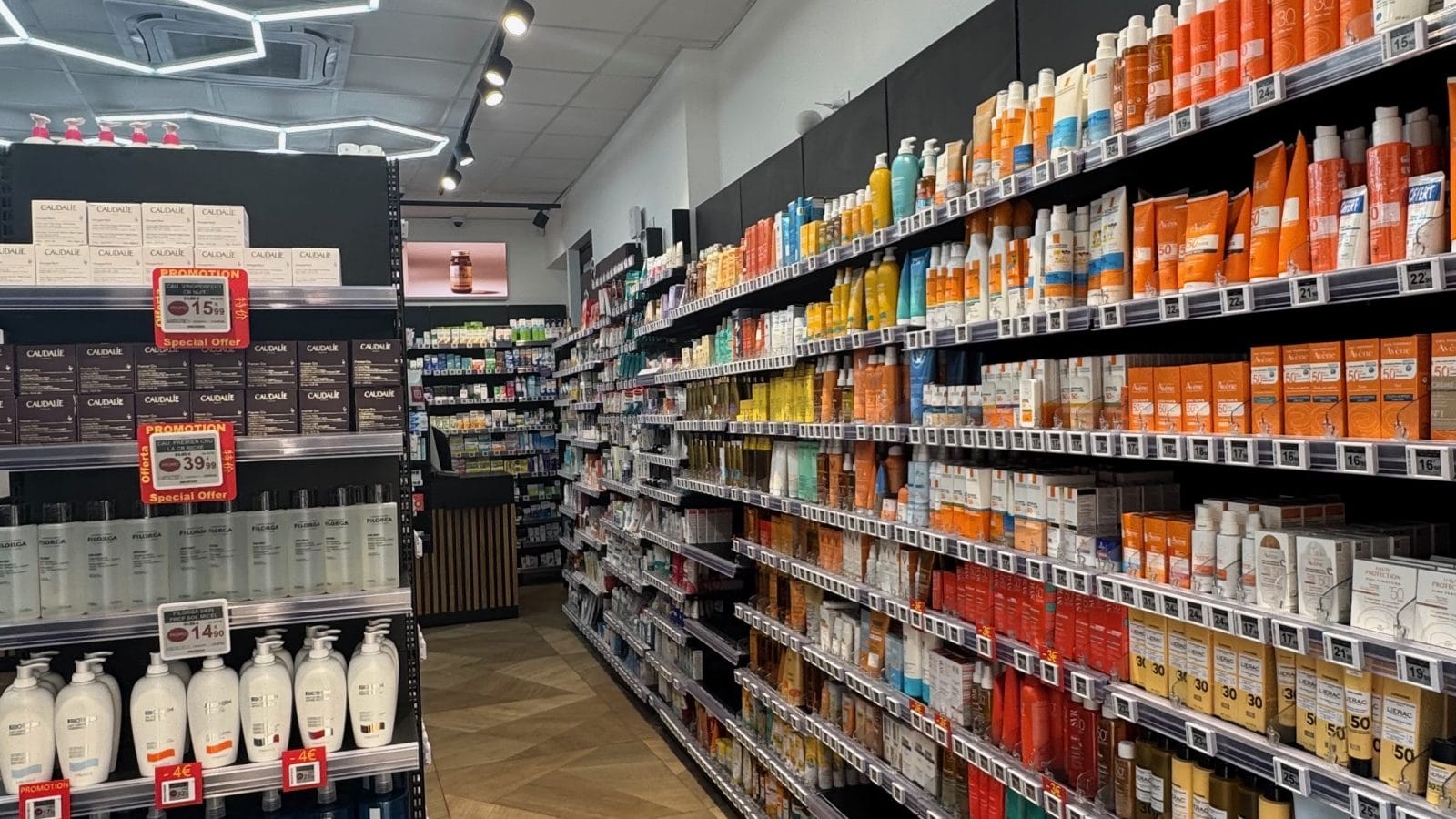
French pharmacy sunscreens are widely counterfeited, particularly on unregulated marketplaces. The safest way to guarantee authenticity is to visit a licensed French pharmacy — like the Pharmacie Anglo-Américaine at 2 rue de France in Nice — or to purchase from specialists who source directly from French authorized distributors. All our products come with original packaging, valid batch codes, and full EU ingredient labeling.